
President Trump is delaying a decision on striking Iran as the White House consults internally and with allies about the timing for such an operation and whether it would meaningfully destabilize the regime, according to five U.S., Israeli and Arab sources with knowledge of the situation.
Why it matters: The military option remains firmly on the table, but Trump's decision to pause has exposed deep uncertainty — inside the administration and among allies — about the risks of a strike that punishes Iran while inviting major retaliation.
- As Trump takes time to consider diplomatic options, the U.S. military is evacuating troops from Middle East bases and sending reinforcements to the region, including the USS Abraham Lincoln and its strike group.
- While a strike does not appear imminent at the moment, a U.S. source familiar with the situation told Axios that "everyone knows the president keeps his finger over the button."
Zoom in: Israeli officials are among those that have expressed reservations over the past 48 hours.
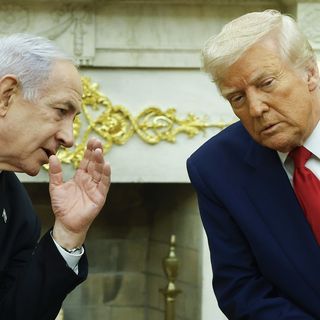
- Israeli prime minister Benjamin Netanyahu spoke to Trump on Wednesday and asked him to wait to give Israel more time to prepare for possible Iranian retaliation, according to three U.S. sources and one Israeli source. The New York Times first reported on Netanyahu's request.
- An Israeli source said that in addition to concerns about retaliation, the current U.S. plan includes strikes on security force targets in Iran, but is not seen by Israel as strong or effective enough to meaningfully destabilize the regime.
State of play: Trump has said repeatedly that he will take military action if Iran kills protesters who have participated in a weeks-long uprising against the regime. "HELP IS ON ITS WAY," he wrote Tuesday, urging the Iranian people to "take over" government institutions.
- Several thousands of protesters are believed to have been killed by the regime's security forces, which have restricted internet and telephone access amid a brutal crackdown.
- White House Press Secretary Karoline Leavitt claimed Thursday that 800 planned executions had been postponed due to pressure from Trump.
- A day earlier, Trump said he'd been told "on good authority" that "the killing in Iran is stopping," and that the regime has "no plan for executions."
Shortly after Trump's comments, Iran's Foreign Minister Abbas Araghchi told Fox News that there are no plans for the "hanging" of protesters — a hallmark of previous crackdowns.
- "The Americans are reassessing now," an Arab source with knowledge told Axios.
- Still, the Iranian regime shut down the country's air space for several hours on Wednesday night in fear of a U.S. attack.
Between the lines: Much of the public messaging from Washington appears designed to maximize uncertainty — and potentially throw off Iran, as was the case when the U.S. struck its nuclear facilities last May.
- Decisions are being made by an extremely small group of top Trump administration officials.
- "The president isn't taking any option off the table, now or in the future. People shouldn't try to box him in," cautioned one U.S. source with knowledge of the matter.
- "He likes to preserve optionality and it's a hallmark of his approach that he'll talk to anyone, anytime."
- Leavitt reiterated Thursday that all options were on the table.
Another U.S. official said it is too soon to definitively say the White House is shifting to de-escalation mode.
- "The president is still examining options and watching the situation unfold," the U.S. official said.
Driving the news: On Tuesday, Trump met with his top national security advisers to discuss a potential U.S. military strike aimed at punishing the Iranian regime for killing protesters.
- Two sources familiar with the meeting said it ended without a clear decision, with Trump seeking more time to weigh the options and refine the plans.
- "What we understood is that Trump decided to take more time to think about it," an Israeli source close to Netanyahu told Axios.
On Thursday morning, Iran's ambassador to Pakistan, Reza Amiri Moghadam, said that "Trump informed Tehran that he will not attack the country and asked that Iran also exercise restraint."
- The White House denied such a message was conveyed to the Iranians.
- Shortly after, Trump reposted a report on Truth Social that a 26-year-old protester would no longer be sentenced to death after his warnings to Iran. "This is good news. Hopefully, it will continue!" Trump said.
Behind the scenes: The Trump administration and the Israeli government have been in close consultations over U.S. plans for a possible strike on Iran, U.S. and Israeli sources said.
- According to Israeli and U.S. sources, Netanyahu was careful over the last two weeks not to be seen as pushing Trump to take action. His directive was to allow the president make his own decisions.
- A U.S. source said the Israeli message to the Trump administration was "we will follow your lead, but we're not pushing for a strike." A second source said: "Bibi didn't tell Trump not to do it, but also isn't pushing him to do it."
The intrigue: As Trump weighs the different military options, the U.S. is taking more steps to increase political and economic pressure on the Iranian regime.
- The Treasury Department on Thursday announced new sanctions against the secretary general of Iran's supreme national security council, Ali Larijani — a close confidant of Iran's Supreme Leader Ali Khamenei.
- Several commanders of Iran's internal security forces and the Islamic Revolutionary Guard Corps involved in the killing of protesters were also sanctioned, in addition to entities affiliated with Iran's "shadow banking" network.
What to watch: U.S. sources said Trump is still open for diplomacy with Iran, but wants to get a clear commitment from Iran's leader that a serious deal is possible.
- "Eventually the Iranian regime will go down unless the supreme leader speaks directly to DJT. He doesn't trust that anyone else in their system has the authority to actually negotiate," a source said.
Sign in to read the full article.
Sign in with Google