
The United States faces a fork in the road in which it can either embrace dynamic capitalism or tolerate stagnation, the leader of America's biggest business group will say today in a major speech.
The big picture: American business leaders see strains of thought in both major parties that they believe threaten the nation's economic vibrancy as the U.S. approaches its 250th birthday.
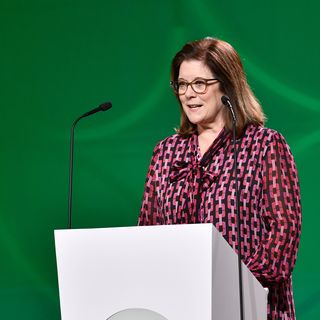
- Suzanne P. Clark, president of the U.S. Chamber of Commerce, will make a full-throated case for embracing the power of markets in the group's "State of American Business" event this afternoon, according to a prepared text seen first by Axios.
- "Not only is this America's 250th year, but it is a year when competing visions for America's economic future are coming to a head," Clark will say, describing it as a "hinge point."
- Voters are frustrated about affordability and job opportunities, and a growing number "are willing to throw out capitalism and try something different," she warns.
Between the lines: The speech, which will be delivered before some of America's most prominent CEOs, doesn't mention any elected officials by name. But it doesn't take much imagination to discern the political trends Clark sees as contrary to the cause of American prosperity.
- Some Democrats openly embrace socialism, and corporate leaders widely believe the Biden years featured a damaging anti-business regulatory overreach.
- President Trump has implemented the highest tariffs in nearly a century and sought to micromanage companies' decision-making from the Oval Office.
- The policy themes Clark advances, by contrast, align with some of the pro-abundance elements of the Democratic Party and the strain of the Republican Party that is open to "the global exchange of goods, services, talent, culture, and ideas."
What they're saying: Businesspeople, she tells Axios, "don't start the day thinking about politics. They have customers to serve and employees to serve and markets they're trying to conquer, and they have a constantly changing landscape to figure out."
- "If one party likes one kind of energy and the other party likes the other kind of energy, how do I know what I'm building? It's more uncertainty and unpredictability and wanting to know what the rules of the road are," she said.
Zoom in: The U.S. should embrace AI, she argues, but also "lead the world in smartly regulating it, and rethink and retool education and training for the future of work."
- It should embrace R&D as the key to future growth, reform permitting to allow more houses and physical infrastructure, rein in excessive lawsuits, and maintain a competitive tax code that encourages investment.
Zoom out: This, she argues, could enable economic growth in the ballpark of 3%, which if sustained for the next five decades would raise the average household's income from $87,000 today to $382,000.
- Higher growth would in turn make the nation's fiscal and other challenges more manageable.
- "Growth doesn't solve everything, but we don't solve anything without it," Clark tells Axios.
Flashback: Clark compares the current moment to 1976, when the U.S. celebrated its bicentennial and Americans also experienced a deep sense of economic malaise, not unlike today.
- She recalls being a child waving an American flag at a parade — but also gas lines that ran a mile down the street.
Sign in to read the full article.
Sign in with Google