
Chris Walti once led engineering for Tesla’s humanoid Optimus. And don’t get him wrong, he’s as serious a robotics believer as there is.
But Walti also thinks investors’ cloud-nine expectations around AI and robots are miscalibrated. AI can do a lot, he says, but it can’t compensate for immature hardware and missing data.
“I do think there’s just fervor around ‘Oh, you can sprinkle AI on top of any robot and magic will ensue,’” Walti said. “Then the value will compound at the rate we’ve seen with some of these other AI companies in say, voice or text. And I don’t think that’s the case. At a high level, where some of the hype and capital is going in robotics is perhaps a little misguided… I think there’s going to be some reality checks happening in the industry over the next year.”
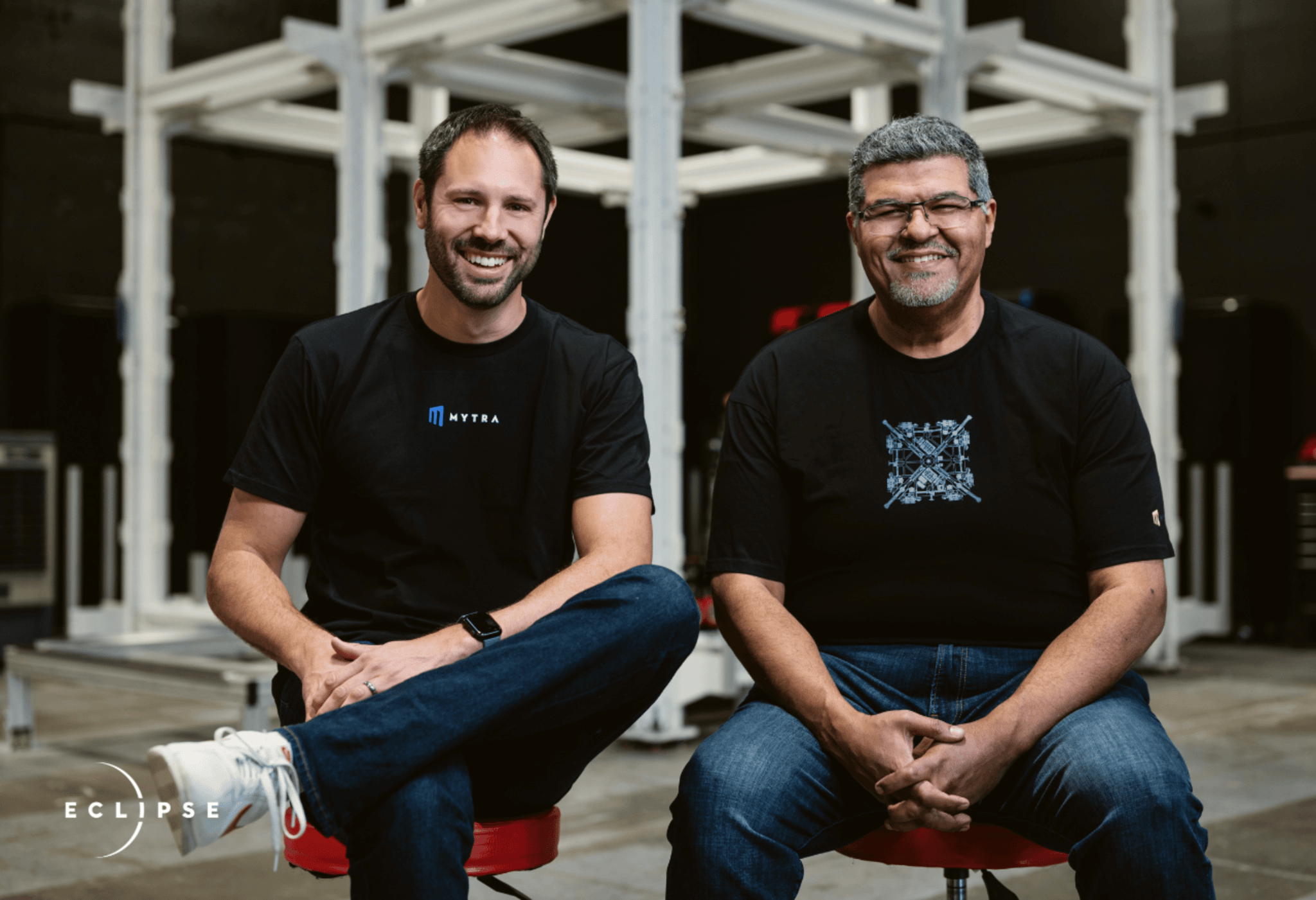
In Walti’s view, the winners of the robotics reality check will be the ones that address very specific “painkiller problems”—the kind of problems that cause companies acute and costly agony every day. Mytra, the company Walti cofounded in 2022 with CTO Ahmad Baitalmal, is focused on standardizing and scaling how heavy material moves across warehouses and factories, so industrial customers can reliably automate full buildings and networks. Unlike the sci-fi-like humanoids being created by some companies (including Tesla), Mytra’s product looks more like sleek but traditional warehouse robots.
Now, Mytra has raised a $120 million Series C, led by Avenir Growth, the company exclusively told Fortune. Kivu Ventures, Liquid 2, D. E. Shaw, and Offline Ventures joined as first-time investors, while existing investors like Eclipse, Greenoaks, Abstract Ventures, and Promus Ventures all doubled down. RyderVentures, the CVC of logistics giant Ryder System, is also a strategic investor.
These aren’t SaaS contracts—industrial deals start with big numbers, said Seth Winterroth, partner at Eclipse. Deals you land with large industrial customers, he added, are “tens of millions and expanding to hundreds of millions, or even billions of dollars of opportunity with that same customer. We have in our pipeline today everything we need for this company to go be a multi-billion dollar annual revenue business.”
Mytra—named for the Greek word for “matrix”—raised its last round in 2024 and had an active 2025. (It says it has multiple Fortune 500 customers but declines to disclose names.) In 2025, Mytra grew its headcount from around 30 to about 150. That growth included key executive hires like ex-Tesla director of finance Gabi Gantus as CFO and the crucial addition of former Tesla CFO Zach Kirkhorn to Mytra’s board.
“Together those two solved some of the most gnarly and tricky problems at Tesla, and we’re kind of rinsing and repeating here,” said Walti.
Walti is clear. He’s not attempting “Tesla 2.0,” but he’s certainly looking to import some of Tesla’s mindset: Ask questions, assume the status quo is wrong, and cohesion matters, so design the whole system together (not in silos).
“At Tesla, it was: Question everything, assume the state-of-the-art is garbage, try to do things differently,” said Walti. “I think there’s a little arrogance in that mindset, but there’s also a lot of freedom to treat things with blank canvas, to approach designing things together as a system.”
Mytra and the current wave of robotics companies on the rise (including Skild, which just raised at a valuation over $14 billion this week) is fundamentally geopolitical and socioeconomic. In the U.S., there are more than 400,000 open industrial jobs, which tend towards exorbitantly high turnover rates. Simultaneously, the U.S. is widely viewed as falling behind China in manufacturing.
”We’re at a point now where we haven’t fully given up manufacturing and industrial capability to China,” said Walti. “Five years from now, if the current trend continues, we’ll be at a point of no return. Right now, the U.S. can still turn the ship around. So the question I’ll ask myself is: Did we do enough? Did we pull all the levers that we could as a company?… We are by no means the full solution. We’re part of the solution, but it’s going to a full court press.”
See you tomorrow,
Allie Garfinkle
X: @agarfinks
Email: alexandra.garfinkle@fortune.com
Submit a deal for the Term Sheet newsletter here.
Joey Abrams curated the deals section of today’s newsletter. Subscribe here.
This story was originally featured on Fortune.com
Sign in to read the full article.
Sign in with Google